Guide
How to commission a facilitated tabletop session
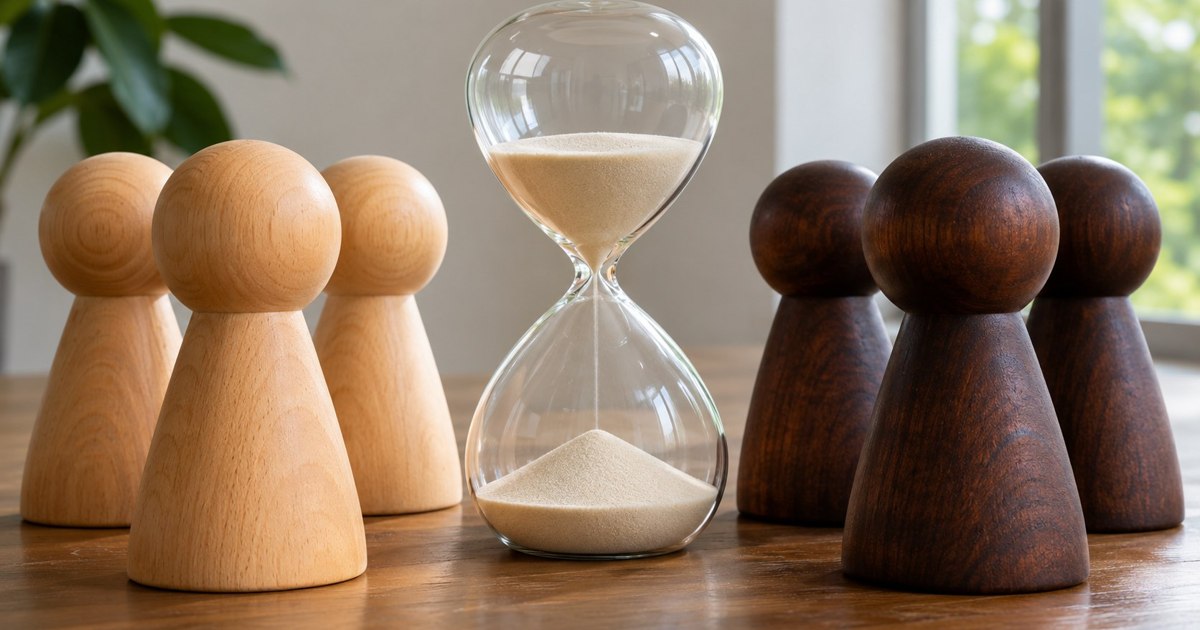
Two chairs, one timing problem. Put that in the brief before anything else. Chair one is taken by someone who showed up for the first turn; chair two sits empty until a visitor wanders in halfway through the round, and your tabletop game facilitator brief should ask each bidder who looks after that visitor while the first player keeps going. Their answers will differ, and so will their prices. A bidder who brings a second host is quoting for one job, and a bidder who plans to teach your own staff the opening turn is quoting for another.
Describe the first visitor and the last ten minutes
Start at the door. Say whether people book or just turn up, and whether somebody greets them or they pick a chair and join in. A closed team workshop with a known list of names needs a different opening from a Saturday drop-in where people drift over after the first move, so say which one you're commissioning. If it's a bit of both, describe how a latecomer finds out what they can still join.
Then the ending, which most briefs leave out. Maybe the goal is that library staff can run another round by themselves next week. A team workshop might close with people explaining a decision they made together. A social group may only want everyone to leave knowing one other person's name and the date of the next session. Each of those spends the facilitator's last ten minutes differently, and a proposal that fills the whole booking with one full game leaves no time for any of them.
Write the result as something you could see or hear in the room. "Staff teach the opening turn to a colleague" is checkable; the provider can plan for it, and you can tell afterwards whether it happened. "Create an engaging experience" fits almost any event ever held. If the commission has a learning purpose, the educational games hub has useful context on facilitators who work to learning objectives; read it with the staff handover in mind.
Ask every provider for the same miniature demonstration
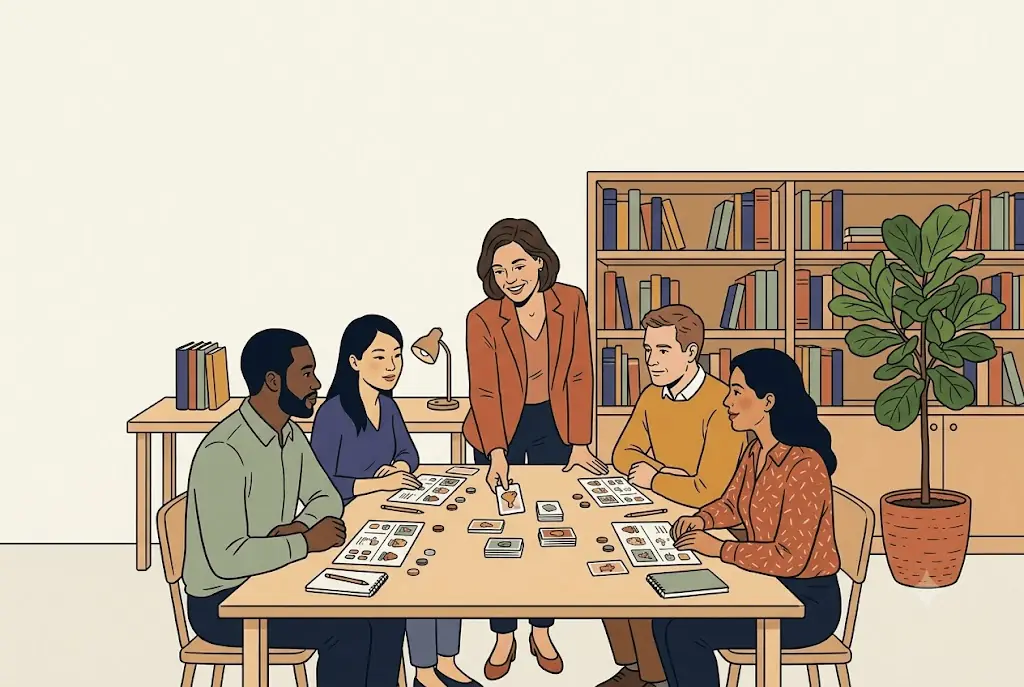
Some presenters can talk about a game for an hour without once showing how they teach it. So send every bidder the same short scenario ahead of the meeting and ask them to teach the first move, live. Two volunteers: one has played before, one hasn't. The one who's played wants to explain every rule up front (there's always one). Watch how the facilitator makes room for the new player and keeps the experienced one on side.
- The invitation. Ask to hear the exact words a first visitor will hear, and listen for a clear choice between joining now and watching for a round.
- One example turn, using the real pieces visitors will handle. Someone sitting across the table should be able to tell where to look.
- One interruption. Halfway through, a volunteer has to step out for a minute, or asks what a card means. See what happens to the rest of the table.
- A teach-back. A staff member teaches the opening turn back, and the facilitator says what they'd change in their next explanation after watching it.
Practising facilitators can apply to join Game Facilitators; applications are reviewed personally, and a description of how you teach an opening round is a good thing to include. If you're the one hiring, ask an experienced facilitator about a round that went wrong. A visitor who left before their first turn, say, or a host who got stuck at one table for twenty minutes. Then ask what they changed for the next group. That answer gives you something specific to check when you call a reference.
Walk the route from the cupboard to the table
Open the games cupboard with whoever sets up the room. If the plan depends on a second copy, open both boxes and count the pieces. A missing token takes a few minutes to replace the week before; found mid-session with six people waiting for their turn, it can sink the session. Put a name against the stock check in the brief, and agree where spares are kept and who puts the right pieces back in the right box at closing.
Then the furniture. One big table and two narrow ones with a walkway between them are different rooms as far as a demo goes. Measure the usable surface if it's tight and send the numbers; mention whether a second, quieter table fits, or a chair for a watcher. Often the fix is small and boring (the facilitator sits facing the door so a newcomer can catch their eye).
Check how information gets across in a turn. Two similar colours on a wide board, seen from across the table: ask what else tells those pieces apart. Cards with lots of small print: ask how the facilitator offers help without announcing someone's difficulty to the whole room. Asking people about access needs in advance is good practice, and there should still be room for someone to ask for an adjustment on the day.
Compare preparation and handover as part of the fee
Ask each bidder to name who does setup and who does handover. One quote might stop when the boxes go back on the shelf. Another might include the facilitator coming back on Tuesday to watch a staff member teach the opening. Decide who runs the next session before you choose between them; if it's going to be your staff, write the rehearsal into the booking.
Follow-up only happens if it's in the agreement. One page on "here's when a newcomer can join" gets used; a forty-slide deck mostly doesn't. For workplace groups, the booking sheet needs a slot for the debrief after pack-up, and the facilitator should write down their opening debrief question in advance. When that question relies on people remembering who decided what, somebody has to take notes during play. More on this side of practice in the team building hub.
If a proposal mentions a credential, copy the wording exactly onto your comparison sheet, with who issued it and what the facilitator had to show to earn it. Ours is still a draft. The certification page sets out three proposed levels (Associate, Certified, Senior) and a path of application, foundations, supervised practice and portfolio, and there's no launch date yet. For this booking, keep a separate line for what you actually saw each bidder do with your sample group.
Keep one observation for the next booking
One host, one pencil, one job: at a drop-in, watch the first person who arrives late and write down what they did (sat down and played, hovered by the door, left). After that the host can play too. At closing, put the note next to the welcome described in the brief, and pick one change for next time.
That note goes into the next brief. "Add a second welcome point during the opening round" hands the facilitator a problem with an answer, and gives the venue a line item it understands. Facilitators: the 2026 founding cohort is open, so submit a founding membership application with one thing you changed after watching a real table, about teaching or about access.